


AI is taking on the admin load in Australian restaurants and bars

Source: Stock

Australian restaurants and bars are slowly allowing AI to handle their paperwork, marking a clear shift in how the hospitality industry operates behind the scenes.

The technology being adopted isn’t the kind you chat with. Rather than conversational AI like ChatGPT or Claude, venues are turning to agentic AI tools like Dext‘s AI Assist, which uses computer vision to read receipts and invoices, including handwritten ones, and automatically extract and categorise every line item into the correct place in a venue’s bookkeeping records.


Venues leveraging AI

Steven Blaine from Decimal, a hospitality finance and technology partner based in Western Australia, said the problem the technology is solving is bigger than it looks from the outside.

“Running a hospitality business is a real grind at times. However, technology is changing this, and many venues are capitalising on new ways of working by leveraging AI,” he said.

“If you run a large kitchen, you’re getting fruit and vegetables every day, seafood, meat and all sorts of deliveries. You might have 50 supplier invoices on a weekly basis just for one department. On top of this, hospitality businesses also require far more granular financial data than many other industries because operators need precise visibility into spending across multiple categories. Applying an AI agent to this challenge means more precision, fewer mistakes and saving a lot of time.”

Real world applications

The real-world applications are surprisingly specific. One of Decimal’s clients was buying produce for both its bar and kitchen from the same supplier, but with invoices addressed slightly differently depending on the account. Before AI, separating those costs manually was unavoidable. Now it happens automatically.

Blaine said, “AI-powered automation can separate these costs easily and precisely, saving the venue huge amounts of time, and allowing them to calculate profit from food sales more easily.”

“One of our hospo clients buys fruit and vegetables for both their bar and kitchen from the same supplier. But the invoices are addressed slightly differently depending on the account,” he added.

“Before AI, we couldn’t automatically code those invoices correctly, separating the two different budgets for the venue’s bar and kitchen. AI now can seamlessly code everything to the right expense account, without any manual input from us or the venue.”

Steven Blaine

Another Decimal client needed fuel levy charges separated from food costs during a period of rising diesel prices.

“We used the auto-categorisation, line-item extraction and agentic AI rule on Dext to automate the process. The combination of automation, AI-powered data extraction and intelligent categorisation dramatically improves both efficiency and accuracy for hospitality operators,” Blaine explained.

Regulation, compliance and front-of-house use

AI is also being used for regulatory compliance in the hospitality space. During an ATO audit, cancelled ABNs from suppliers can become a serious liability for venues.

According to Blaine, if the ATO audits a venue and finds cancelled ABNs from suppliers, that becomes a serious issue. It’s up to the venue to check that all their suppliers have a valid ABN, and that can be a real pain. AI comes to the rescue in those instances.

The technology is also moving into front-of-house. AI-powered reservation agents can answer incoming calls, collect customer details and book tables without any staff involvement, a meaningful development for venues dealing with ongoing staffing shortages.

“One really interesting area is AI-powered reservation agents,” Blain shared. “When you ring a venue, instead of a staff member stopping what they’re doing to answer the phone, the AI handles the booking, collects the customer information and reserves the table automatically.”

Cloud-based point-of-sale platforms are also embedding AI-driven analytics that let operators ask plain-language questions about their business and get answers instantly rather than manually pulling reports.

“You can ask questions like: ‘How many people come back after using the burger-and-pint promotion to buy anything else?’ Previously, you’d have to manually run reports and analyse the data yourself. Now AI can surface those insights almost instantly.”

For an industry that runs on razor-thin margins, the question is no longer whether AI has a place in hospitality. It’s how quickly venues can get on board.

Source: Brightus

Find more food culture updates on Crumb Wire.

Pallavi Mathur

pallavim9893@gmail.com

Pallavi Mathur is the founder and editor of Crumb Wire. She cut her teeth in PR before turning her lifelong passion for food into a full time gig. Pallavi brings readers a daily digest of what's hot in food and drink, covering restaurants, retail and features rooted firmly in food culture.

https://crumbwire.com/

Trending News

Editor's Picks

AI is taking on the admin load in Australian restaurants and bars

Australian restaurants and bars are slowly allowing AI to handle their paperwork, marking a clear shift in how the hospitality industry operates behind the scenes. The technology being adopted isn’t the kind you chat with. Rather than conversational AI like ChatGPT or Claude, venues are turning to agentic AI tools like Dext‘s AI Assist, which uses computer vision to read receipts and invoices, including handwritten ones, and automatically extract and categorise every line item into the correct place in a venue’s bookkeeping records. Venues leveraging AI Steven Blaine from Decimal, a hospitality finance and technology partner based in Western Australia, said the problem the technology is solving is bigger than it looks from the outside. “Running a hospitality business is a real grind at times. However, technology is changing this, and many venues are capitalising on new ways of working by leveraging AI,” he said. “If you run a large kitchen, you’re getting fruit and vegetables every day, seafood, meat and all sorts of deliveries. You might have 50 supplier invoices on a weekly basis just for one department. On top of this, hospitality businesses also require far more granular financial data than many other industries because operators need precise visibility into spending across multiple categories. Applying an AI agent to this challenge means more precision, fewer mistakes and saving a lot of time.” Real world applications The real-world applications are surprisingly specific. One of Decimal’s clients was buying produce for both its bar and kitchen from the same supplier, but with invoices addressed slightly differently depending on the account. Before AI, separating those costs manually was unavoidable. Now it happens automatically. Blaine said, “AI-powered automation can separate these costs easily and precisely, saving the venue huge amounts of time, and allowing them to calculate profit from food sales more easily.” “One of our hospo clients buys fruit and vegetables for both their bar and kitchen from the same supplier. But the invoices are addressed slightly differently depending on the account,” he added. “Before AI, we couldn’t automatically code those invoices correctly, separating the two different budgets for the venue’s bar and kitchen. AI now can seamlessly code everything to the right expense account, without any manual input from us or the venue.” Another Decimal client needed fuel levy charges separated from food costs during a period of rising diesel prices. “We used the auto-categorisation, line-item extraction and agentic AI rule on Dext to automate the process. The combination of automation, AI-powered data extraction and intelligent categorisation dramatically improves both efficiency and accuracy for hospitality operators,” Blaine explained. Regulation, compliance and front-of-house use AI is also being used for regulatory compliance in the hospitality space. During an ATO audit, cancelled ABNs from suppliers can become a serious liability for venues. According to Blaine, if the ATO audits a venue and finds cancelled ABNs from suppliers, that becomes a serious issue. It’s up to the venue to check that all their suppliers have a valid ABN, and that can be a real pain. AI comes to the rescue in those instances. The technology is also moving into front-of-house. AI-powered reservation agents can answer incoming calls, collect customer details and book tables without any staff involvement, a meaningful development for venues dealing with ongoing staffing shortages. “One really interesting area is AI-powered reservation agents,” Blain shared. “When you ring a venue, instead of a staff member stopping what they’re doing to answer the phone, the AI handles the booking, collects the customer information and reserves the table automatically.” Cloud-based point-of-sale platforms are also embedding AI-driven analytics that let operators ask plain-language questions about their business and get answers instantly rather than manually pulling reports. “You can ask questions like: ‘How many people come back after using the burger-and-pint promotion to buy anything else?’ Previously, you’d have to manually run reports and analyse the data yourself. Now AI can surface those insights almost instantly.” For an industry that runs on razor-thin margins, the question is no longer whether AI has a place in hospitality. It’s how quickly venues can get on board. Source: Brightus Find more food culture updates on Crumb Wire.

No passport required: Macca’s brings global menu icons to Aussie shores

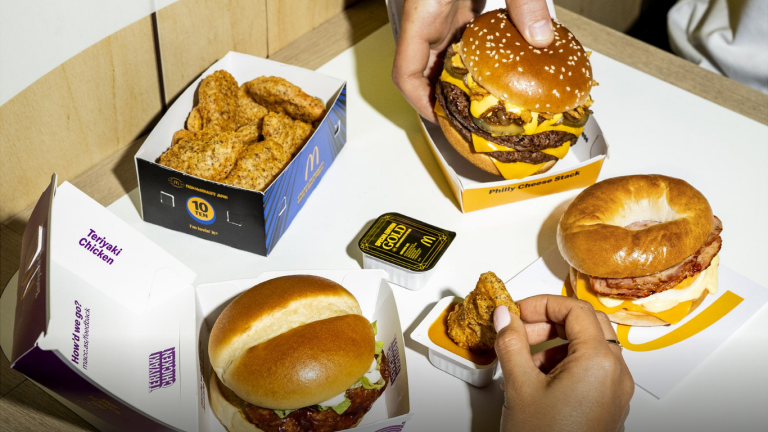
Macca’s is launching a limited-time range of international menu items in Australia for the first time, with five dishes from Japan, Canada, the US and the UK landing nationwide from Wednesday, May 27. The Menu Heist range is McDonald’s answer to years of Australians asking why they can’t have what everyone else is getting, sans passport stamp. While Australians have long coveted items like Korea’s cult Bulgogi Burger, India’s vegetarian McAloo Tikki and Canada’s McLobster, the Menu Heist marks the first time McDonald’s has formally brought a curated selection of international items to Australian shores in one go. McDonald’s Australia does regularly introduce new and limited flavours locally, but these tend to be original creations rather than direct imports of the globalised menu hits that have built cult followings overseas. Amanda Nakad, Marketing Director of Menu and Brand for McDonald’s Australia, said, “For the first time, Menu Heist brings together some of the most loved menu items from around the world, giving Aussies the chance to try them right here at home. Each Menu Heist item has been carefully selected from menus across Japan, Canada, the UK and the US – known for their bold, distinctive flavours that have built cult followings globally. “It’s a limited time range that celebrates big flavour, quality ingredients, and the creativity fans love from Macca’s around the world. These are flavours Aussies have been craving online for years, and now it’s finally our turn.” The range The McDonald’s limited edition Menu Heist range includes: The Teriyaki Chicken Burger (Japan): A 100% Aussie chicken breast fillet in sweet and tangy teriyaki sauce, with shredded lettuce and mayonnaise in a soft bun. The Garlic & Black Pepper McNuggets (Japan): Classic McNuggets seasoned with a bold blend of garlic and black pepper. The Benny-Style Bacon ‘N Egg Bagel (Canada): Rasher bacon, egg, cheese and hollandaise sauce in a warm toasted bagel, available on the extended breakfast menu until 11:30 am. The Philly Cheese Stack (UK): Two beef patties with grilled and crispy onions, three cheese slices, cheese sauce and pickles in a toasted bun. Special Edition GOLD Sauce (US): A creamy blend of sweet, smoky, mustard and tomato, made for dipping fries, McNuggets and McWings. The Menu Heist range is available at McDonald’s nationwide from May 27 via drive-thru, front counter, McDelivery and the MyMacca’s app, for a limited time only. Source: Omnicom Find more food and drink news on Crumb Wire.

Brisbane’s Amora Hotel is now growing its own produce onsite

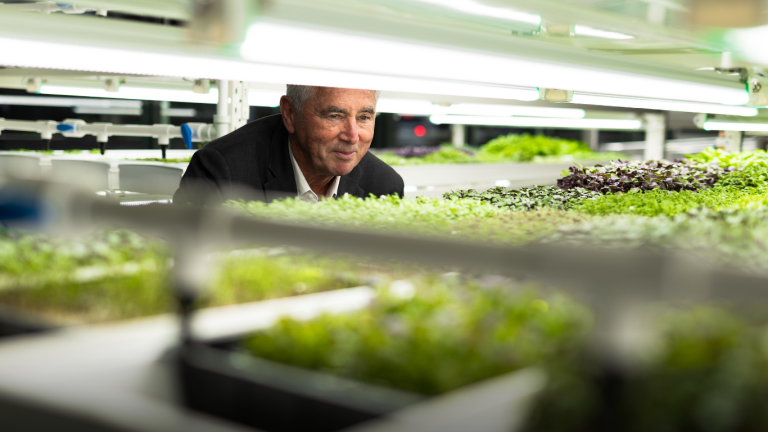
Brisbane’s Amora Hotel has become the city’s first hotel to install a commercial urban Macrofarm, in partnership with urban agriculture company Greenspace. The expansion follows successful Macrofarm networks in Sydney and Melbourne, marking Greenspace’s third city rollout. The company’s first Sydney CBD Macrofarm launched in 2021 and includes a dedicated edible flower farm, followed by a second Macrofarm in Melbourne’s Southbank A two-part model The model works in two parts. A centralised Macrofarm transforms underutilised space in the hotel into a hydroponic growing facility, producing micro greens, herbs, lettuces and Australian natives year-round indoors. That produce is then distributed to smaller hydroponic cabinets called Microfarms, located in the dining room, where chefs can harvest ingredients on demand in front of diners, often moments before they hit the plate. Peter Fox, Founder and CEO of Greenspace, said, “We’re moving beyond sustainability as a concept and into something you can see, touch and taste. We’re shifting from a framework where buildings simply consume resources to one where they actively produce them as well. “It’s a model that makes both commercial and environmental sense for some of our customers, like Amora, Sofitel, the Greenbank SC and W hotel. By embedding networked food production into a community, we’re reducing supply chain reliance and food miles, while improving nutrition, consistency and quality for that urban environment.” The system uses up to 95% less water than traditional farming methods, produces at least four times more per square metre and operates without chemical sprays or pesticides. Because produce is harvested on demand rather than in bulk, spoilage and packaging waste are significantly reduced, and indoor growing enables consistent supply regardless of weather conditions. The impact The broader significance of the model lies in what it represents for commercial buildings. Traditionally, greenery in commercial environments has been decorative with limited functional return. Greenspace’s model replaces this with productive, edible systems, shifting buildings from simply consuming resources to actively producing them, with food production emerging as a new layer of infrastructure across hospitality and workplace environments. John Bristowe, General Manager at Amora Hotel Brisbane, said, “Sustainability is an important part of our hotel’s ongoing journey, and working alongside Greenspace allows us to further embrace ideas that are practical, purposeful and aligned with the future of hospitality. “This collaboration is a wonderful example of how businesses can work together to create something meaningful for guests, visitors and the wider Brisbane community.” Greenspace’s Microfarm network now spans some of Australia’s most recognised hotel properties including Hyatt Regency Sydney, Sheraton Grand Sydney Hyde Park, Park Hyatt Melbourne, Langham Melbourne and Swissotel Sydney, as well as Sofitel, Greenbank SC and the W Hotel. Source: M Grove PR Find more food and drink news on Crumb Wire.

How Korean food brand bibigo is using golf to win Western consumers

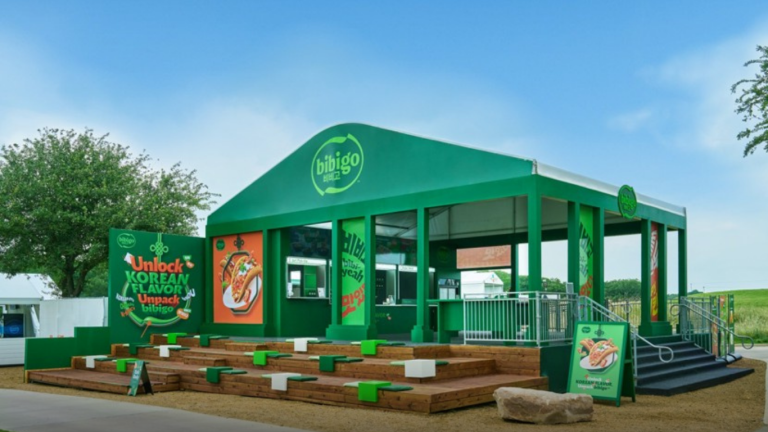
CJ Foods is using this week’s THE CJ CUP Byron Nelson PGA Tour event in Texas to push its Korean food brand bibigo to Western consumers. The brand, owned by CJ Foods, Korea’s largest food company, is running a large-scale presence at TPC Craig Ranch in McKinney from May 20 to 24, trading traditional advertising for in-person experiences that let consumers taste first and buy later. Two dedicated concession stands at Holes 7 and 17 serve exclusively bibigo-based menus to tens of thousands of tournament attendees, while an interactive brand hub called the bibigo Zone offers product sampling, social media engagement and giveaway mechanics designed to generate reach well beyond the tournament gates. The event also features a line-up of culinary talent developing exclusive menus using bibigo products. Chef Junghyun Park of two-Michelin-starred Atomix in New York, Iron Chef winner Chef Beau MacMillan and Chef Yong-wook Yoo, known from the internationally streamed Culinary Class Wars, each appear across the tournament week. The most significant element of the event is the soft launch of jari, a new premium traditional Korean liquor brand from CJ Foods, making its public debut at the tournament ahead of a formal US market entry in the second half of 2026. The jari cocktail menu features drinks crafted from traditional Korean liquors, including Moonbaesool and Gamuchi Soju, available at a dedicated booth and both bibigo concession stands, paired directly with the food menu. Jin Kim, Global CMO of CJ Foods, said, “By combining interactive fan experiences, world-class chef collaborations, and the exciting debut of our new traditional liquor brand, we aim to offer an unparalleled culinary journey that truly unlocks the essence of K-Food.” Now in its third year of sponsoring the Byron Nelson, CJ Foods has built bibigo into a brand sold across approximately 80 countries. The same sports-led approach is being applied in Australia, where CJ Foods Oceania uses major events to drive trial and build familiarity with the bibigo range, which is available at Coles, Woolworths and IGA. Find more food culture updates on Crumb Wire.
Bippi chilli and LaManna join forces to celebrate Nonno and Nonna

Italian chilli brand Bippi and LaManna supermarket have come together to create Casa Della Nonna – a pop-up museum dedicated to Nonno and Nonna’s house. Scheduled to kick off at LaManna’s Essendon Fields store from Saturday, May 23, Casa Della Nonna is born from a pretty personal place. Bippi founder Ben Circosta, an Italian grandson himself, started the chilli brand after his own Nonna’s handmade recipes inspired him to bring them to a wider audience. The pop-up is his love letter to Italian grandparents everywhere, recreating the sights, sounds and smells of their homes in museum format, from plastic-covered couches and religious paraphernalia to infinite doilies and the smell of home-cooked pasta. Informative plaques and interactive touchpoints tell the story and cultural significance behind each item. Circosta said, “We wanted to create an immersive experience that feels like stepping into a traditional Italian family home, with every detail reflecting daily rituals, routines and cosy familiarity. For visitors with Italian heritage, every element will bring fond memories and nostalgia. Those without Italian backgrounds will get a real sense of what it’s like to visit Nonno and Nonna’s house. It’s a playful tribute to everything we love about them.” To mark the launch, the first 100 visitors on May 23 will receive a free serving of homemade pasta, with a Spin the Wheel and a Taralli guessing game offering the chance to win Bippi products. Hawthorn Football Club player Massimo D’Ambrosio will also be there from 10 am to 1 pm with his Nonno, who will challenge customers to a game of Briscola. Beat him and you take home a free Bippi product. The pop-up runs during LaManna’s regular opening hours for six weeks, with product tastings and kids’ activities available throughout. On Saturday, June 13, customers who bring a grandparent to LaManna will receive a free coffee. Circosta said, “We invite all Melburnians to stop by and visit – whether you love Italian food, have an interest in Italian culture, or just want to experience something new, there’s something for the whole family.” Casa Della Nonna is at LaManna Supermarket, 10 English Street, Essendon Fields, VIC 3041. Source: LittleBIG Marketing Find more food retail updates on Crumb Wire.

Contact us

©2025- All Rights Reserved. Developed by Infutive Pvt. Ltd.