Axil Coffee and Audi Revolut F1 Team launch a limited edition Grand Prix blend

Source: Supplied

Audi Revolut F1 Team has teamed up with Melbourne coffee roaster Axil Coffee on a limited edition blend timed to the opening race of the 2026 Formula 1 season at the Australian Grand Prix.

The blend, called Roast 26, is named after the team’s race car, the Audi R26, and delivers notes of chocolate ganache and mixed berries with a subtle fruit kick. It is available at all Axil Melbourne cafes now and online.


The collaboration brings together two brands with serious credentials. Axil Coffee is the roaster behind reigning World Barista Champion Jack Simpson, and the Audi Revolut F1 Team will be taking to the Albert Park circuit for the first time this season.

Axil Coffee founder Dave Makin says the timing feels right for the brand. “We’re really proud to be collaborating with Audi Revolut F1 Team during race week,” he says.

“Melbourne really comes alive during the Grand Prix, showcasing our internationally recognised baristas and coffee is very exciting.”


Audi Revolut F1 Team x adidas Fanwear Collection and Teamwear
Audi Revolut F1 Team Drivers Gabriel Bortoleto & Nico Hülkenberg

Makin adds that the release is an opportunity to put Melbourne’s coffee culture on the world stage. “It’s a pleasure to be able to share the exclusive limited edition Roast 26 blend with both visiting F1 fans and coffee connoisseurs during such an exciting time in the city, and it’s a great opportunity for visitors to head in store and learn more about the calibre of our coffee that saw Melbourne’s own Jack Simpson crowned the best barista in the world.”

In store customers can also enter a draw to win an Audi Driving Experience courtesy of Audi Australia.

The Roast 26 blend is available at all Axil Melbourne stores and online now.

Source: Theory Crew

Find more food and drink updates on Crumb Wire.

Pallavi Mathur

pallavim9893@gmail.com

Pallavi Mathur is the founder and editor of Crumb Wire. She cut her teeth in PR before turning her lifelong passion for food into a full time gig. Pallavi brings readers a daily digest of what's hot in food and drink, covering restaurants, retail and features rooted firmly in food culture.

https://crumbwire.com/

Trending News

Editor's Picks

Whittaker’s Banana Caramel block arrives in Australia: TikTok weighs in

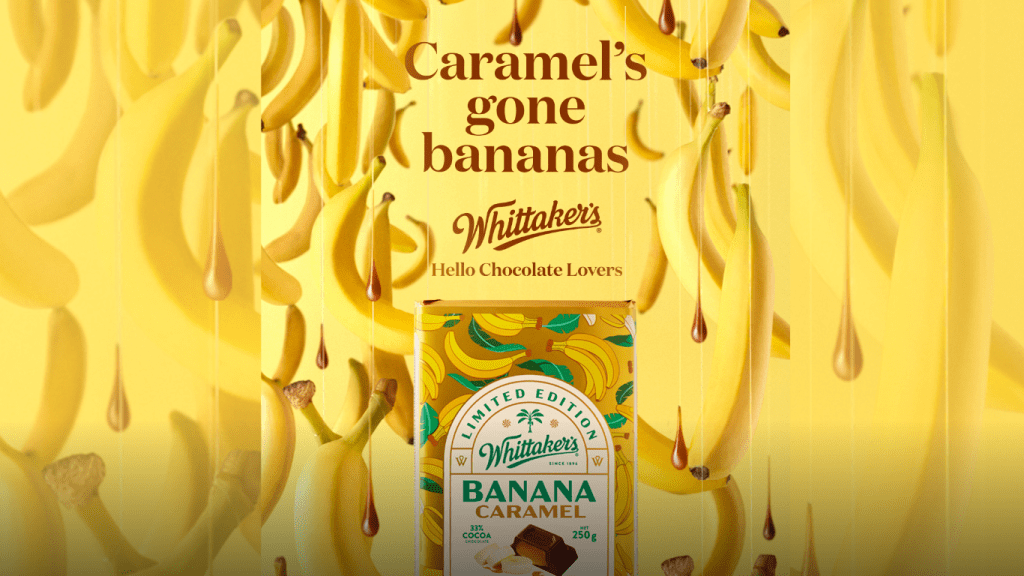
Whittaker’s Banana Caramel block has made it to Australian shelves and Choc-Tok is already weighing in. The flavour has been a cult favourite across the ditch in New Zealand for a while, where a limited-edition run sold out in 2025, and Australians have apparently been vocal enough about wanting it that Whittaker’s has made it official. The fan-favourite block pairs the brand’s Creamy Milk chocolate with a smooth golden caramel and natural banana flavour. “It’s a flavour that Chocolate Lovers have been asking for, and we know Australians love a little bit of fun when it comes to their chocolate blocks,” says Holly Whittaker, co-COO of Whittaker’s. “This one truly delivers and ticks all the boxes; it’s creamy, nostalgic, and just the right amount of unexpected.” First taste tests are already making the rounds on TikTok, with @_lianadam and @snackreviews_aus among the creators sharing their verdicts. Early signs suggest the internet is on board. @snackreviews_aus LIMITED EDITION Whittaker’s Banana Caramel 🍌 This has just hit Aussie shelves after launching last year in New Zealand, and it’s filled with a banana infused caramel. Verdict: I like it! It’s more caramel than banana but you can definitely still taste the banana flavour. 📍 Available exclusively at Woolworths (purchased for $9) @whittakersnz #whittakersbananacaramel #bananacaramel #whittakers #whittakersbanana #woolworths ♬ original sound – Emily | Snack Reviews Aus @_lianadam Whittaker’s LIMITED EDITION banana caramel chocolate🚨🍫 #fyp #sydneyeats #sydneyfood #chocolate #woolworths @whittakersnz @Woolworths_au ♬ original sound – LIANA DAM Banana and caramel is not a combination that needs a lot of convincing. It sits in that sweet spot between nostalgic and indulgent, the kind of flavour that makes sense the moment you try it even if you didn’t know you wanted it. For a chocolate block that retails at $9, the bar for disappointment is also relatively low. Whittaker’s Banana Caramel block is available now at Woolworths stores nationwide and hits Coles from June 1. Source: Good Appetite Find more food retail updates on Crumb Wire.

Domino’s x Pistachio Papi lava cake lands in stores nationwide

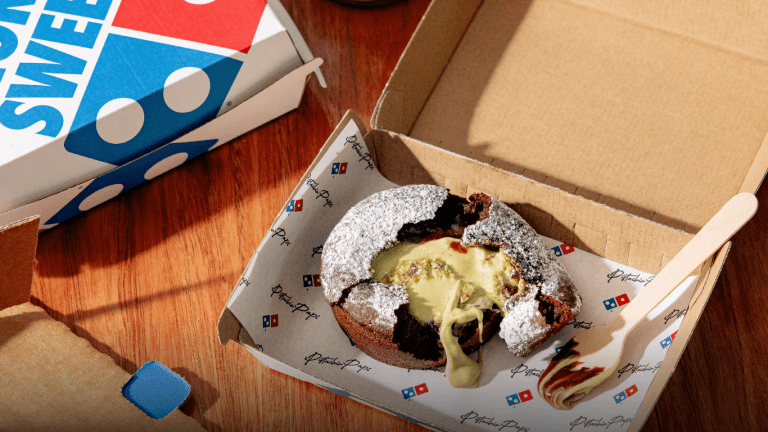
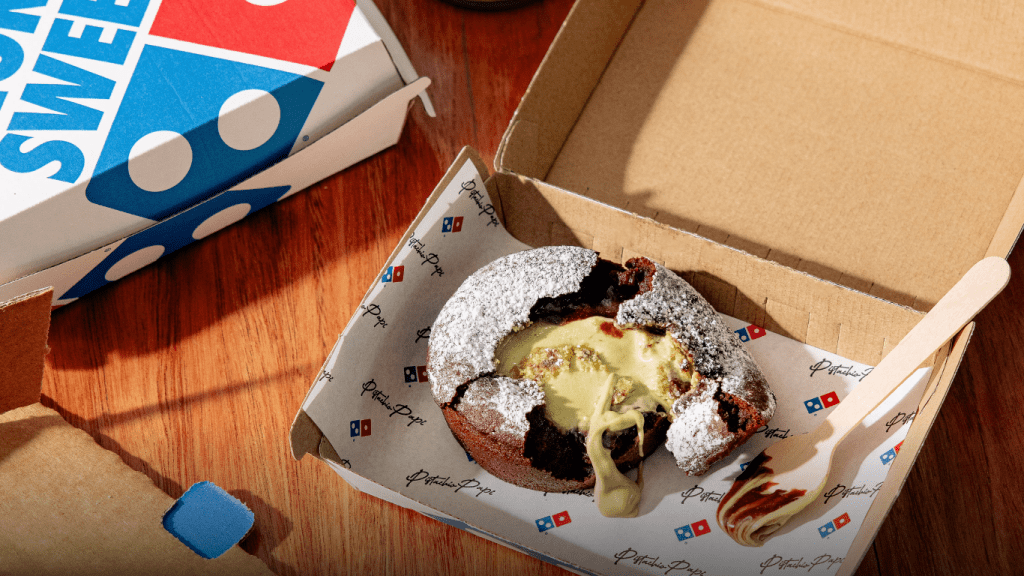
Australia’s obsession with all things pistachio has officially reached Domino’s with a fresh take on the ever-popular lava cake. The new Pistachio Papi Lava Cake is a riff on the chain’s classic Choc Lava Cake, which has been on the menu since 2009, now with a molten centre that combines Pistachio Papi’s signature spread with rich chocolate. The dessert promises to be warm, oozing and very much a product of the moment. Pistachio fever has well and truly taken hold in Australia. What was once a moderately liked ice cream flavour has quietly become one of the country’s most sought-after taste profiles, turning up in everything from pastries to protein shakes. Pistachio Papi has been at the centre of that shift, if not one of the driving forces behind it, having already collaborated with the likes of Raw C coconut water, Krispy Kreme and MuscleNation before landing at Domino’s. Michael Treacy, Head of New Product Development and Innovation at Domino’s, said the Choc Lava Cake has been a favourite since it first landed on the menu in 2009, describing the Pistachio Papi partnership as the natural way to take it further. “It’s a unique experience from the very first bite, the kind that could keep customers craving for more.” Mark Abdelmalik, Founder of Pistachio Papi, said the collaboration brought a long-held fan request to life. “Papi fans have always wanted a dessert like a lava cake, with Papi as the centre oozing out, so we brought that dream to life with Domino’s. The ultimate sweet treat for a night in and perfect for sharing.” The lava cake makes its debut alongside another new launch: the Hot Honey Saucy Chicken. What’s more, selected pizzas can now also be upgraded to ‘Mega Topped,’ where customers can opt for 50% more toppings for an additional $2.00. The Pistachio Papi Lava Cake is available in-store, through the Domino’s app or via delivery nationwide from today, April 20. Source: Wrights Communication Find more food and drink news on Crumb Wire.

Melbourne’s best restaurants to be crowned at inaugural OpenTable Awards

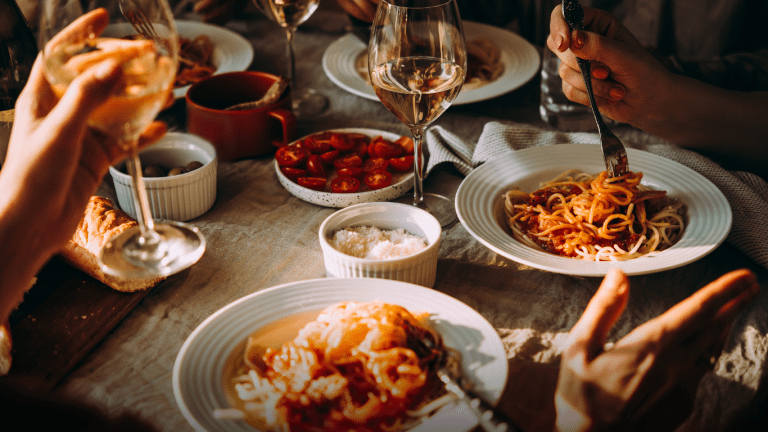
Melbourne’s dining scene has no shortage of opinions about who deserves a gong, and now OpenTable is making it official. The restaurant booking platform has launched its inaugural Restaurant Awards, a new program recognising the venues shaping Melbourne’s food culture across three distinct categories: OpenTable Icons, Industry Choice and People’s Choice. While the Icons are hand-selected by a panel of critics and industry figures appointed by OpenTable, Industry Choice is a peer-to-peer category, voted on by hospitality workers who know what it actually takes to run a restaurant. People’s Choice is exactly what it sounds like, driven by the diners who fill the city’s dining rooms night after night. It is worth noting that OpenTable’s own research found 63% of Australian diners are more likely to try a restaurant they haven’t visited if it has an award or appears on a best restaurants list, which goes some way to explaining why the platform is getting into the awards game. “OpenTable’s inaugural Restaurant Awards will shine a light on Melbourne’s incomparable hospitality scene, the venues that help make the city a world class dining destination and set the global standard time and time again,” said Drew Bowering, General Manager Australia at OpenTable. “We’re proud to celebrate our partner restaurants and reward the exceptional experiences and service that they’re delivering.” The Icons panel The Melbourne Icons judging cohort is a solid line-up that includes Anthea Loucas Bosha, CEO of Food and Drink Victoria, food journalist Dani Valent, photographer Kristoffer Paulsen, Leon Kennedy, CEO and Founder of PAX Hospitality, chef Rosheen Kaul, television host and food writer Sofia Levin, Sophie McIntyre, Founder of Club Sup and Thurman Wise, Co-Founder of MEASURED Studio. As for what they are looking for, OpenTable’s research found that 87% of Australians consider food quality and consistency the dominant factor in what makes a restaurant iconic, and almost half (46%) said price point has no bearing on iconic status. So the panel has its work cut out separating the genuinely great from the merely expensive. The shortlists 65% of Australian diners surveyed named Melbourne as the country’s top foodie city, and the shortlists reflect the breadth of what that actually means in practice. Industry Choice Restaurant Design: Circl, Coupette, Disuko, Yiaga, Yugen Dining Innovation: Amaru, Babines, Serai, Shelaneous, Vue de monde Impact: All Things Equal, Farmer’s Daughter, RESIDENCE at The Potter, Scarf, The Mulberry Group Standout Service: Bistra, Il Solito Posto, Malin, Reed House, Ripponlea Food and Wine People’s Choice Neighbourhood Gem: Lagoon Dining, Neighbourhood Pizza, Punch Lane Wine Bar, Salona, The Carlton Wine Room Bar and Pub of the Year: Babines, Lamaro’s Hotel, Lui Bar, Marquis of Lorne, Toorak Cellars Bucket List: Amaru, Attica, Lee Ho Fook, Shelanous, Vue de monde Opening of the Year: Daphne, Disuko, Muses, Suze, Yiaga How to vote and what happens next People’s Choice and Industry Choice voting is open now on the OpenTable website and closes May 18 2026. Voters are also in with a chance to win one of several $250 gift cards. All winners, including the OpenTable Icons, will be announced at a ceremony at Melbourne’s Luci restaurant on June 15 2026. Sydney venues will get their own Icons list the following day, June 16 2026. Source: Praytell Agency Find more dining out updates on Crumb Wire.


NZ has entered the chat: Push for official white wine emoji underway

New Zealand Winegrowers wants to give white wine its own emoji and is taking the campaign global. While the world grapples with its problems, New Zealand has identified a particularly pressing cultural oversight: white wine has no emoji. And yet it is one of the most consumed wine styles on the planet. “Wine culture has evolved, but our emojis haven’t,” says Charlotte Read, General Manager Brand, New Zealand Winegrowers. “Red wine has an emoji. Champagne has an emoji. Cocktails have several. But one of the world’s trending wine styles, refreshing, vibrant white wine doesn’t have a voice. We believe New Zealand, a world leader in refreshing and expressive white wines, is the perfect champion for this movement.” The campaign, called The Great White Wine Toast, is a global push to convince the Unicode Consortium, the body that decides which emojis exist, to finally add a white wine glass to the lineup. The proposed design features a pale-gold wine in a classic glass, inspired by the crisp, aromatic character of New Zealand’s most celebrated white wine styles, from its globally recognised Sauvignon Blanc to its Chardonnays, Pinot Gris, Albariño and more. Timing is everything New Zealand’s top three exported white wine varieties each have their own international day, and they all fall in May: International Sauvignon Blanc Day on May 1, International Pinot Gris Day on May 17 and International Chardonnay Day on May 21. The campaign is using that window to build as much momentum as possible before submitting a formal case to the Unicode Consortium, backed by petition signatures, social engagement data and cultural relevance evidence. New Zealand has earned its emoji New Zealand’s case for being the one to lead this charge is grounded in geography as much as it is in reputation. The country’s southerly location and maritime climate create conditions that produce white grapes with a natural backbone of acidity across a wide range of varieties. All of the country’s winegrowing regions sit close to the sea, with long hours of sunshine and crisp night temperatures that result in wines with vibrant, lifted fruit characters. Its pioneering Sauvignon Blanc effectively reshaped the global white wine category, so the argument that New Zealand has earned the right to champion the emoji is not without merit. “New Zealand white wines are instantly recognisable, defined by bright fruit flavours and a distinctly refreshing style,” says Read. “It embodies everything a white wine emoji should represent, and if any region deserves to convince the consortium the world needs a white wine emoji, it’s New Zealand.” Get involved Wine lovers worldwide are being encouraged to sign the petition urging Unicode to act, participate on social media using #WhiteWineEmoji and raise a glass of New Zealand white wine on May 1 for the global toast across time zones using #WhiteWineEmoji and #GreatWhiteWineToast. Throughout May, the campaign continues with #NZWine #WhiteWineEmoji and #PourYourselfAGlassOfNZ. The emoji argument is straightforward: digital culture should reflect real-world drinking culture, and right now it doesn’t. Whether the Unicode Consortium agrees is another matter, but New Zealand is making the case and bringing some excellent bottles to the table while doing it. Source: Tide PR Find more food culture updates on Crumb Wire.

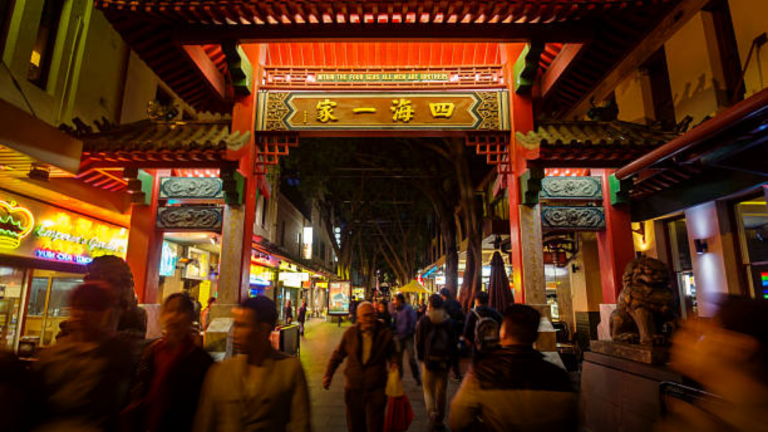
Sydney’s Chinatown is evolving and international students are leading the charge: HungryPanda

Every year, as Australian universities fill back up, so do the streets around Sydney’s Chinatown. New students, new money, new appetites and a neighbourhood that never stops evolving. International students have long been a driving force behind the evolution of Chinatown, but their influence goes well beyond filling restaurant seats. According to Kitty Lu, Director of Public Affairs at HungryPanda Australia, a food delivery app specialising in Asian cuisine, they function as both cultural carriers and economic engines. “International students play a uniquely dual role in reshaping Australian Chinatowns – they are both cultural carriers and economic drivers,” Lu says. “Rather than preserving a static version of Chinatown, they continuously refresh it – introducing new regional cuisines, dining habits, and even social ways of engaging with food.” It’s not just about what they eat either. Many international students are also part of the ecosystem as workers, entrepreneurs and operators, meaning they are shaping supply just as much as they are driving demand. “This creates a highly dynamic loop where international students influence what is consumed, what is created, and ultimately what Chinatown evolves into,” Lu adds. Chinatown beyond the postcode The pandemic changed things permanently for Chinatown’s food businesses. Traditionally reliant on foot traffic and dine-in, many were forced online during COVID and never looked back. Lu describes that period as a turning point rather than a temporary fix. “Access to diaspora foods has expanded far beyond the physical boundaries of Chinatown,” she says. “Consumers no longer need to travel into the city – they can now discover and order highly specific, authentic dishes from anywhere, often driven by online search and social media.” For merchants, that shift opened up entirely new audiences. Small, traditional businesses that once depended on local regulars can now reach customers across the city, and increasingly, digital marketing and customer engagement tools are proving just as important to growth as logistics. What people are actually ordering The data coming out of HungryPanda, whose catalogue spans Asian cuisine broadly across Chinese, Japanese, Korean, Thai and beyond, points to a rise in demand for regional Chinese cuisine specifically. According to Lu, Sichuan and Hunan have been growing steadily, Northeastern Chinese is gaining ground with an emerging interest in Yunnan and Xinjiang flavours, dishes that until recently were hard to even find in Australia. Lu attributes a lot of this to younger consumers who are “more open to exploring beyond familiar, westernised versions of Chinese food,” adding that “consumers are not just satisfied with convenience – they’re actively seeking out more niche, authentic, and even lesser-known dishes.” The phenomenon is not limited to Chinese-Australian diners either. “Mainstream audiences are becoming more adventurous, often driven by social media, peer recommendations, and increased cultural exposure,” Lu says. Fusion and modern interpretations are sitting alongside traditional regional dishes rather than replacing them, reflecting a consumer base that wants both authenticity and novelty at the same time. Based on the current trend, students arriving now – once they’re done processing everything they learnt at orientation – might just put another thing or two on all our tables by this time next year. Find more food and drink features on Crumb Wire.

Contact us

©2025- All Rights Reserved. Developed by Infutive Pvt. Ltd.