


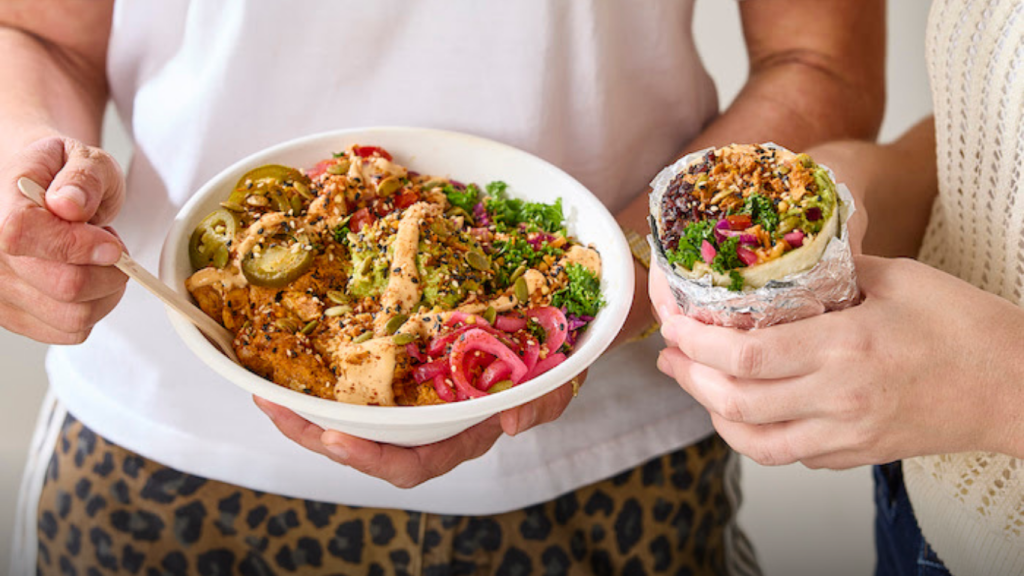
New Zambrero Nourish+ bowl and burrito most loaded build yet

Source: Supplied

Zambrero has just announced the launch of Nourish+, a new limited-edition bowl and burrito range containing some of the brand’s most ambitious combos yet.

Available from today, April 15, the build is a busy one in the best way. A kale, cabbage and carrot slaw dressed in Zambrero’s signature Trezigo sauce sits at the base, with sesame crunch, pickled onions, house-made guacamole, black beans and black rice layered on top.


Grilled chicken, barbacoa beef, pork, lamb or pulled mushroom round it out, finished with a choice of sauce, all available as a bowl or burrito from $13.90.

Healthy Mexican

Zambrero has built a reputation as one of the healthier fast-casual options going around, and online, the sentiment generally backs that up. The menu lends itself to lower-calorie, high-fibre and plant-based builds, with black rice, fresh salsas and guacamole among the options, and most meals are protein-forward by default.

As with any menu, some items are more indulgent than others, but the flexibility to build your own plate is a big part of the appeal.

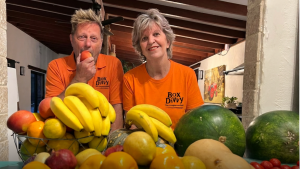
Daryl McCormack, Chief Executive Officer of Zambrero, said: “When we built the Nourish+, we started with the question: what would make someone drive across town? The answer is in the bowl or the burrito – the Trezigo slaw, the sesame crunch, the black rice. It’s the kind of combination that makes you want to eat it again before you’ve finished.

Fast growing, fast casual

Fast-casual dining in Australia has never been more competitive, and Zambrero has been building its case for two decades. Dr Sam Prince founded the brand in Canberra in 2005 as a 21-year-old medical student with the idea that a Mexican-inspired lunch could do more than just fill you up.

The brand claims it is now Australia’s largest Mexican-inspired restaurant group, with over 300 locations across Australia, the US, the UK, Ireland and New Zealand.

The Plate 4 Plate initiative, delivered via partners Rise Against Hunger, Love Mercy and Foodbank, has seen Zambrero donate over 100 million meals since the program launched. Every Nourish+ sold adds to that number.

“One hundred million meals donated through Plate 4 Plate – that number means everything to us. The Nourish+ adds to that tally with every single order. Doing good and eating well have always gone hand in hand at Zambrero,” McCormack added.

The Nourish+ Bowl and Burrito is available now for a limited time at all Zambrero locations nationally.

Source: Alpha Consulting

Find more food and drink news on Crumb Wire.

Pallavi Mathur

pallavim9893@gmail.com

Pallavi Mathur is the founder and editor of Crumb Wire. She cut her teeth in PR before turning her lifelong passion for food into a full time gig. Pallavi brings readers a daily digest of what's hot in food and drink, covering restaurants, retail and features rooted firmly in food culture.

https://crumbwire.com/

Trending News

Editor's Picks

Sydney’s Chinatown is evolving and international students are leading the charge: HungryPanda

Every year, as Australian universities fill back up, so do the streets around Sydney’s Chinatown. New students, new money, new appetites and a neighbourhood that never stops evolving. International students have long been a driving force behind the evolution of Chinatown, but their influence goes well beyond filling restaurant seats. According to Kitty Lu, Director of Public Affairs at HungryPanda Australia, a food delivery app specialising in Asian cuisine, they function as both cultural carriers and economic engines. “International students play a uniquely dual role in reshaping Australian Chinatowns – they are both cultural carriers and economic drivers,” Lu says. “Rather than preserving a static version of Chinatown, they continuously refresh it – introducing new regional cuisines, dining habits, and even social ways of engaging with food.” It’s not just about what they eat either. Many international students are also part of the ecosystem as workers, entrepreneurs and operators, meaning they are shaping supply just as much as they are driving demand. “This creates a highly dynamic loop where international students influence what is consumed, what is created, and ultimately what Chinatown evolves into,” Lu adds. Chinatown beyond the postcode The pandemic changed things permanently for Chinatown’s food businesses. Traditionally reliant on foot traffic and dine-in, many were forced online during COVID and never looked back. Lu describes that period as a turning point rather than a temporary fix. “Access to diaspora foods has expanded far beyond the physical boundaries of Chinatown,” she says. “Consumers no longer need to travel into the city – they can now discover and order highly specific, authentic dishes from anywhere, often driven by online search and social media.” For merchants, that shift opened up entirely new audiences. Small, traditional businesses that once depended on local regulars can now reach customers across the city, and increasingly, digital marketing and customer engagement tools are proving just as important to growth as logistics. What people are actually ordering The data coming out of HungryPanda, whose catalogue spans Asian cuisine broadly across Chinese, Japanese, Korean, Thai and beyond, points to a rise in demand for regional Chinese cuisine specifically. According to Lu, Sichuan and Hunan have been growing steadily, Northeastern Chinese is gaining ground with an emerging interest in Yunnan and Xinjiang flavours, dishes that until recently were hard to even find in Australia. Lu attributes a lot of this to younger consumers who are “more open to exploring beyond familiar, westernised versions of Chinese food,” adding that “consumers are not just satisfied with convenience – they’re actively seeking out more niche, authentic, and even lesser-known dishes.” The phenomenon is not limited to Chinese-Australian diners either. “Mainstream audiences are becoming more adventurous, often driven by social media, peer recommendations, and increased cultural exposure,” Lu says. Fusion and modern interpretations are sitting alongside traditional regional dishes rather than replacing them, reflecting a consumer base that wants both authenticity and novelty at the same time. Based on the current trend, students arriving now – once they’re done processing everything they learnt at orientation – might just put another thing or two on all our tables by this time next year. Find more food and drink features on Crumb Wire.

Pasta Shop Potts Point: Paola Toppi’s new pasta bar serves nothing over $30

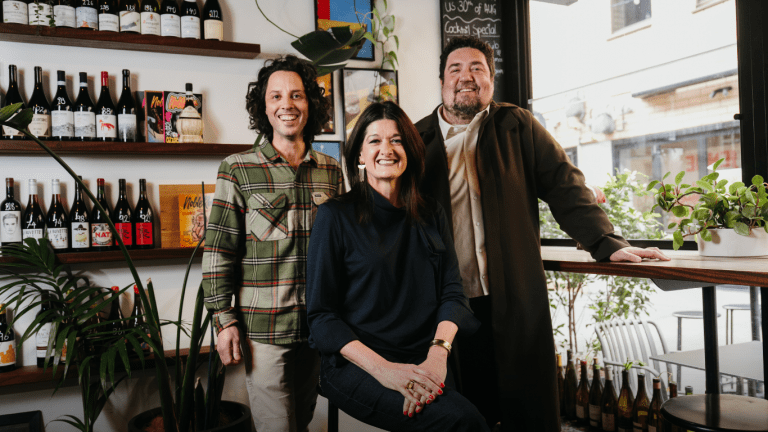
Pasta Shop, Paola Toppi’s new pasta bar in Potts Point, opens April 17 and it might just be the most unpretentious thing Sydney’s dining scene has seen in a while. Taking over the former Sonora Mexican site on the corner of Bayswater Road and Ward Avenue, it’s the latest chapter from the woman behind Sydney institution Machiavelli and Bar M, but the vibe here is deliberately different. Gone are the white tablecloths and high-production silverware. In their place are walnut timber tables and terracotta directors’ chairs, and nothing on the menu costs more than $30. The space was designed by Steel and Stitch, with a striking terracotta red wall, lemon trees and mossy greenery filling out a cosy outdoor courtyard that manages to feel like a back street in Naples without trying too hard. Toppi’s decision to open the 35-seat diner was driven by a desire to make pasta more accessible. “People are doing it tough,” she says. “Pasta is for everyone; it was never meant to be exclusive. In Italy, it’s a staple that people of all walks of life can afford to eat every day.” Artisinal pastas Eleven artisanal pastas, ranging from Toppi’s 40-year-old spaghetti Machiavelli to spicy rigatoni alla vodka, gnocchi gorgonzola, fusilli crab and a classic lasagne. Beyond the pasta, there’s also a homemade polpette con sugo, salads, house-made focaccia and desserts including tiramisu and cannoli. A wall inside reads ‘Pasta Always Forever,’ which about sums it up. “It’s decades of pasta knowledge, made accessible,” Toppi says. “We’re still using the premium ingredients we’ve always been known for, but by creating a more relaxed dining experience, people are able to enjoy them for less.” Drinks are kept simple: a monthly rotating list of Italian wines, ready-to-pour Maybe Sammy Negronis and Margaritas, Sardinian beer and traditional Italian soft drinks. BYO is also available. Delivery and takeaway Toppi spent two years developing a custom takeaway bowl specifically designed to stop pasta overcooking in transit. Delivery is available across the Eastern Suburbs. “People don’t always want to eat out, but they still want to be able to order a quality pasta and a bottle of wine they can enjoy from the comfort of their own home,” she says. “It’s about bringing the best of Italy to everyone.” The whole thing is rooted in a pretty straightforward idea: that good pasta shouldn’t be a special occasion. Premium ingredients, relaxed setting, accessible prices. For a city that has watched dining out become increasingly expensive, the timing feels right. Pasta Shop is open for dinner from 5 pm to 9 pm, Wednesday to Sunday and lunch from 11.30 am to 3 pm, Thursday to Sunday. No reservations required. Source: Wine Glass Media Find more dining out updates from Crumb Wire.

Case closed: Bananas are Australia’s favourite fruit, MyFitnessPal data shows

Australians have confirmed what most of us already suspected: the banana is the undisputed king of the fruit bowl. New data from nutrition and food tracking app MyFitnessPal showed Aussies logged bananas more than 9 million times over the past year, making them not just the country’s most popular fruit but the most logged food in the app overall. The avocado, ever-present on the brunch table, came in second with 6.4 million logs, a gap of more than three million. A poll of over a thousand Australians backed this up. When asked to pick a side, 58% went for bananas over avocados (32%), with 10% unwilling to commit. Hard to argue with. When are Australians eating them? Mostly as a snack, as it turns out. Close to 4 in 10 Australians (39%) reach for a banana in the afternoon, with a similar number (35%) doing the same in the morning. Breakfast also clocked in at 35%, while post-workout use was surprisingly low at just 3%. Michaela Sparrow, nutritionist and MyFitnessPal ambassador, said: “Bananas continue to earn their place as a daily staple in Aussies’ lives because they’re simple, nutritious, and incredibly versatile. “What’s really interesting is what tracking reveals about everyday habits – bananas showing up as the most logged food tells us people aren’t just eating them occasionally, they’re a consistent part of people’s routines. They’re typically portable, affordable, and naturally packed with fibre and essential nutrients that support sustained energy.” The eating habits are just as straightforward as the fruit itself. 83% of Australians eat bananas fresh and on their own. Smoothies (22%) and cereal or oatmeal (18%) are a distant second and third, while baking (10%) and using them as a topping (4%) barely register. Sparrow also pointed to snack times specifically. “Being the most popular fruit in MyFitnessPal’s expansive food database, it’s also of little surprise we’re seeing bananas dominate across all times of the day, especially for morning and afternoon snack times. “Those moments are when people need a convenient energy boost, and bananas deliver with natural carbohydrates that help keep blood sugar levels steady, making them a smart alternative to highly processed snack options.” The real debate: how do you peel it? Here’s where it gets divisive. 68% of Australians peel from the stem, which is the conventional approach. Only 13% go from the bottom, which is technically how monkeys do it and, for what it’s worth, far less likely to result in a squished top. 19% said they’re flexible, which feels like a diplomatic non-answer. On ripeness, 58% prefer a slightly yellow banana over a fully yellow one (43%). Firm over soft. Make of that what you will. The data was released yesterday to coincide with World Banana Day, and if nothing else, it confirms that Australians are creatures of habit. The banana has been a lunchbox staple for generations and according to MyFitnessPal’s numbers, that’s not changing any time soon. Source: Icon Agency Find more food and drink news on Crumb Wire.

Meatball lollipops: IKEA, Chupa Chups to follow through on April Fools’ prank collab

IKEA and Chupa Chups are turning an April Fools’ prank into reality, with a free meatball-flavoured lollipop set to appear in stores across Australia and New Zealand this June. What started as a joke has now become a very real, very strange limited-edition collaboration and honestly? We have questions. Who is responsible for this? Ingka Group, the largest IKEA retailer operating across 32 countries, has teamed up with Chupa Chups to produce a meatball-flavoured lollipop, available for free in hundreds of IKEA stores worldwide this June, including locations across Australia and New Zealand. “On 1 April, IKEA customers from around the world were playfully invited to imagine an IKEA meatball-flavoured lollipop, and we were delighted by the shocked reactions and conversations that it sparked with our Australian customers,” said Patricia Routledge, Country Communications Manager, IKEA Australia and New Zealand.  “On the back of the global hype, we’re excited to make it reality as a limited-edition giveaway in partnership with Chupa Chups, soon to be available in IKEA stores across Australia and New Zealand. We’re thrilled to have the rare opportunity to bring a seemingly impossible mash-up to life, with the ‘twinkle in the eye’ magic that can only be IKEA.” Chupa Chups developed the flavour to capture the taste and feeling of IKEA’s iconic Swedish meatball and its lingonberry accompaniment, two things that have become a universal food memory for an entire generation of flat-pack furniture shoppers. https://videos.files.wordpress.com/Bp5MaVwj/ikea-x-chupa-chup-meatball-flavoured-lollipop_video-asset-1-1.mp4https://videos.files.wordpress.com/Bp5MaVwj/ikea-x-chupa-chup-meatball-flavoured-lollipop_video-asset-1-1.mp4 The lollipop is not for sale. One million will be produced and handed out in-store, meaning anyone who wants one will have to head into their nearest IKEA store. Where did this idea come from? It all began on April 1 when IKEA put out a cheeky announcement imagining a meatball-flavoured lollipop and gave the comments section a field day. Off the back of that response, the two brands decided to actually make it happen. The collab also ties into IKEA’s broader focus on food and everyday eating. The brand’s latest Cooking and Eating Report looks at how Australians actually eat: more than half (56%) cook from scratch regularly, above the global average. But they’re pragmatic about it too, with microwaves (58%) and air fryers (48%) firmly in the mix, and dinner often eaten early and on the sofa rather than at a table. Why the meatballs? A meatball-flavoured lollipop is a strange idea, but it’s rooted in one of the most recognisable food experiences around. IKEA meatballs have a kind of cultural weight to them that goes well beyond a cafeteria snack. Chupa Chups, which has been making lollipops since 1958, is at least a fitting partner for something this odd. Martin Hofling, Global Marketing Manager, Chupa Chups, said, “When IKEA invited us to explore a lollipop inspired by their iconic Swedish meatball, we were immediately intrigued. At Chupa Chups, we are always looking for new ways to surprise and delight people – it’s part of our ‘Forever Fun’ spirit. “This limited-edition lollipop is our playful tribute to a flavour that people all over the world associate with IKEA, reimagined in a way only Chupa Chups can do.” Lingonberry, we get – but meatball flavoured lollies were not on anybody’s cards for 2026. That’s the best thing about food collaborations – they can quickly take the unexpected to ‘unexpectedly good’. Or not. We’ll see how this one goes. More details on availability in Australia and New Zealand are expected to be revealed soon. Source: Omnicom   Find more food culture updates on Crumb Wire.

New Zambrero Nourish+ bowl and burrito most loaded build yet

Zambrero has just announced the launch of Nourish+, a new limited-edition bowl and burrito range containing some of the brand’s most ambitious combos yet. Available from today, April 15, the build is a busy one in the best way. A kale, cabbage and carrot slaw dressed in Zambrero’s signature Trezigo sauce sits at the base, with sesame crunch, pickled onions, house-made guacamole, black beans and black rice layered on top. Grilled chicken, barbacoa beef, pork, lamb or pulled mushroom round it out, finished with a choice of sauce, all available as a bowl or burrito from $13.90. Healthy Mexican Zambrero has built a reputation as one of the healthier fast-casual options going around, and online, the sentiment generally backs that up. The menu lends itself to lower-calorie, high-fibre and plant-based builds, with black rice, fresh salsas and guacamole among the options, and most meals are protein-forward by default. As with any menu, some items are more indulgent than others, but the flexibility to build your own plate is a big part of the appeal. Daryl McCormack, Chief Executive Officer of Zambrero, said: “When we built the Nourish+, we started with the question: what would make someone drive across town? The answer is in the bowl or the burrito – the Trezigo slaw, the sesame crunch, the black rice. It’s the kind of combination that makes you want to eat it again before you’ve finished. Fast growing, fast casual Fast-casual dining in Australia has never been more competitive, and Zambrero has been building its case for two decades. Dr Sam Prince founded the brand in Canberra in 2005 as a 21-year-old medical student with the idea that a Mexican-inspired lunch could do more than just fill you up. The brand claims it is now Australia’s largest Mexican-inspired restaurant group, with over 300 locations across Australia, the US, the UK, Ireland and New Zealand. The Plate 4 Plate initiative, delivered via partners Rise Against Hunger, Love Mercy and Foodbank, has seen Zambrero donate over 100 million meals since the program launched. Every Nourish+ sold adds to that number. “One hundred million meals donated through Plate 4 Plate – that number means everything to us. The Nourish+ adds to that tally with every single order. Doing good and eating well have always gone hand in hand at Zambrero,” McCormack added. The Nourish+ Bowl and Burrito is available now for a limited time at all Zambrero locations nationally. Source: Alpha Consulting Find more food and drink news on Crumb Wire.

Contact us

©2025- All Rights Reserved. Developed by Infutive Pvt. Ltd.